While I'm a fan of using extremes to test the bounds of an idea, sometimes we get a little apples-to-oranges. In my experience with stuff like this, I've started looking more at specific output and intended purpose for things, rather than what may be the 'pinnacle' of design or and idea.Most wont know what there looking at, but there’s probably not an engine builder on the planet that would choose open deck sleeves compared to the closed deck design. You sure wont see any open deck designs in nhra.

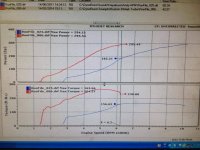
Good lesson in 'area under the curve' there... there is about 50% more work being done by the busa in those graphs if you work it out.
The thing I like about 2.3 engine is the replaceable cylinders, where if you needed to you could install replacement without step boring the cyl. and pressing in a sleeve, and likely distorting cylinders next to repaired one. But I do believe the 2.5 does offer more rigidity to allow for increased power levels.While I'm a fan of using extremes to test the bounds of an idea, sometimes we get a little apples-to-oranges. In my experience with stuff like this, I've started looking more at specific output and intended purpose for things, rather than what may be the 'pinnacle' of design or and idea.
A 2.5L engine making 500hp is impressive; call it 200hp per liter. While that number on a street going vehicle would pop eyeballs 50 years ago (turbos be ****ed), that is well within the design envelope for a lot of open deck engines. Comparing anything to an NHRA Top Fuel engine is lunacy... those engines are making over 1200hp/liter on a conservative estimate (some would say 1400hp).
I certainly wouldn't go out of my way to close the deck on a 2.3 motor unless it was the limiting factor... and I don't see that happening for any reasonable person, or the majority of people who are slightly unreasonable for that matter. Triumph's engine designers likely didn't close the deck for any sort of performance/reliability gains... these days it's usually about the most cost effective way to achieve the design goals, taking into account parts and services as well as manufacture and possible warrantee. Everything about the "jug cylinder" configuration over the individual sleeve set-up screams easier to assemble, easier to service, and more profitable to sell as replacement parts.
Just my opinion, of course

I would believe they weren't against replacing cyl/sleeve, regardless of compression, but due to condition of engine, better to start fresh with a good known engine for a basis and perform the checks before starting the build. Nothing wrong with increasing compression on these engines. Just my thoughts, I'm not speaking for Kevin or Konrad.Kevin and Konrad were talking and what I took away, as an admitted engine-building dummy, was that replacing sleeves was ok in a “regular“ engine rebuild but if you were going with high-compression stuff just go ahead and get a lower, just like you would have to with a 2.5. Why risk a compromised lower-end when they aren’t that expensive. Kevin already had so many of the parts. “Oh, I already have those right here…” I have a spare quart of oil in my garage…
Yes, exactly.I would believe they weren't against replacing cyl/sleeve, regardless of compression, but due to condition of engine, better to start fresh with a good known engine for a basis and perform the checks before starting the build. Nothing wrong with increasing compression on these engines. Just my thoughts, I'm not speaking for Kevin or Konrad.
Indeed, serviceable cylinders are nice touch... if you can keep a few extra.The thing I like about 2.3 engine is the replaceable cylinders, where if you needed to you could install replacement without step boring the cyl. and pressing in a sleeve, and likely distorting cylinders next to repaired one. But I do believe the 2.5 does offer more rigidity to allow for increased power levels.