
Oldman68

.020 Over
Joined
Oct 14, 2022
Messages
29
Location
South West UK
Ride
2012 Rocket Roadster Red Haze
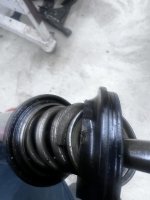
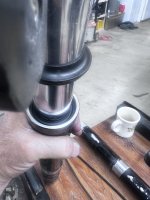
I have a 2012 Rocket Roadster and 2 yrs ago the L/h fork seal started leaking after it was parked up for the winter, so I replaced both side seals and dust covers at the same time with Triumph genuine parts and upgraded the fork springs with Hagon progressive kit. All was fine until a few days ago when again after the winter hibernation the R/H fork seal is now showing sighs of leaking. The L/h seal is OK so the first thing I thought was that had I fitted the seals the wrong way around but having travelled last yr around France for at least 1000 mls+ without issues the problem would have shown up earlier. So I removed the dust seal on the both side to see which way around the fork seal was fitted and after dropping down both dust seal you can see what I would describe as the underside of a oil seal as these are upside down forks, i.e. a seal with a coiled spring that goes around the seal to keep the seal tight.
fork seal.jpg
when looking upwards from the ground so is this correctly fitted. I have a factory Triumph manual and it does not give any info on which way around it should should be fitted. I have looked on YouTube as most do It seems to me that's its correctly fitted but I would like to know for sure.
 
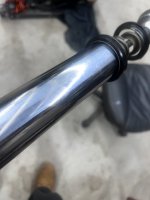
Writing on seal face faces out, you should see, writing and xxxx on seal face, i cant see w picture. Your spring clip has bent ears, the ends if that spring clip should be further in guide. My pictures are awful not much help,
 

Attachments

  • IMG_7255.jpeg
    IMG_7255.jpeg
    116.2 KB · Views: 13
  • IMG_7254.jpeg
    IMG_7254.jpeg
    82.4 KB · Views: 11
  • IMG_7253.jpeg
    IMG_7253.jpeg
    149.5 KB · Views: 13
Last edited:
Looking at your last photo I think I can see the coiled compression spring that's part of the oil seal, which if that's the case then my fork seals are fitted correctly.
 
I beleive the spring goes inside. If you can see the spring, it is installed wrong. At least that how I have always done it. 54 plus years of home wrenching. With the spring side inside you get the pressure of the fork oil pushing against the seal and spring to keep the lip of the seal tight against the fork tube.
 
My two cents worth
I think that the seals has two sides with springs so anyway you install it you will see a spring.
The seal has offset springs (meaning that one sides protruding farther out then the other) so when you install the spacer it will not hit the part of the seals.
However I dought that will cause a leak.
When i do mine I fill the space/valley between with light grease that will protect the seal points from wearing out.
Hth herman.
 
The orientation should be the compression spring on the seal is on the oil side. The top of the seal is driven with a weighted tool. The retaining clip is fitted into the groove to maintain the seal in the housing. If your seal is leaking after storage it's likely due to dry out and cold shrink of the rubber seal faces. The seals are double dam and have a 'knife' edge on each seal face. You can try using a seal cleaning tool that's essentially a thin bit of plastic you push up between the slider and the seal and work it around the seal. This cleans any debris out of the seal dams and gets the seal to mate up with the slider. The seal on the right below is the proper orientation for an 'upside down' fork. The spring clip would be below the seal and in a groove machined into the fork tube. Your seals look to be properly installed from your picture.
1773609446918.png
 
From what I have found out is that the seals are fitted correctly, Ive watched a video of someone replacing these and when taking out the old seals it clearly shows the orientation i.e. the coiled seal spring on the outside face. I know that normally oil seals are fitted the other way around but they have not been an issue for 2 years now and from another video showing that the seals were fitted incorrectly they leaked straight away.
 
So if they are leaking and not worn out then the problem could be some debris in the seal to slider interface that allows oil to bypass the seal. Invest in a cheapo seal cleaner and give it a whirl.
 
It is possible that the guide bushings of the fork leg are worn out, which causes play and deformation of the oil seal, leading to subsequent leakage.
Checking the condition of the guide bushings is not difficult: just lift the front wheel and pull it toward you.

The oil seals are installed correctly, with springs on both sides of the seal.
Last year, before the season started, I rebuilt the fork because the dust boots had cracked, and they can’t be replaced without disassembling the fork. At that time, I decided to replace everything at once — new oil seals and dust boots.
 
Back
Top