Eisenfarn

.020 Over
Joined
Apr 22, 2024
Messages
49
Ride
Rocket 3R, Kawasaki ZZr14, Suzuki GSX14
Hi all, just went for a short spin and on returning I parked outside my garage, when I went to put the bike in the garage, the battery was flat and the bike would not start, looks like it's time for a new battery. I have 2 other bikes that use either a Yuasa YTX14H-BS or more recently due to the Yuasas only lasting 18 months, Motobatt MBYZ16H. Does anyone know if the Motobatt will fit my 2020 3R?
Thanks
 
Thanks, just ordered a Noco Lithium NLP14. If it does half of what they claim, it should be better than a Yuasa or a Motobatt :)
 
Can't speak to the Motobatt but I replaced my OEM battery with this one and I am very happy with it. NOCO Lithium NLP14 500A Lithium Powersport Battery NOCO NLP-14. I put the NLP-20 in my wife's H-D Heritage Classic and I am very happy with it too.

Technoguppy , loves Lithium ion battery and supports all fire hazards that comes with it like below check govt news articles, because as per his logic lithium ion is very safe 🤣 and all incidents are isolated
and as per technoguppy logic, people should not buy rocket as their first bikes because as per his logic, all people in canada must buy 100cc, 200cc and get experience regardless of the fact if they have been riding in some other part of the world for 10+ years,
As per his logic, if not ridden on canadian roads then technoguppy label them as riders who do not care about other people lives and as per technoguppy logic those type of new riders will die and must sell the rocket and keep everyone else safe😂

so whats your stand on battery fires, now feel free to say that these are all *isolated incidents* and lithium ion batteries are everywhere 😂😂😂😂


sep 09 2026 - Canadian Govt media, https://www.cbc.ca/news/canada/toronto/lithium-ion-battery-fire-record-9.7336169

Toronto blows past all-time record for lithium-ion battery fires
There have been 97 lithium-ion battery fires in the city so far this year: fire services


CBC News (Aug 20, 2026): “Lithium-ion batteries keep catching fire in Toronto. Here’s why they are so dangerous” — Explains rapid flashover risk (as little as 90 seconds) and firefighting challenges; 86 fires by mid-August
.https://www.cbc.ca/news/canada/toronto/lithium-ion-e-bike-fires-9.7311576


CBC News (Aug 12, 2026): “Latest in string of fires involving lithium-ion batteries injures 4” — Multiple fires in 24 hours; calls for faster regulation.https://www.cbc.ca/news/canada/toronto/lithium-ion-battery-fire-injures-4-9.7305028


CBC News (Aug 5, 2026): Toronto fire chief warns of surge after back-to-back incidents.https://www.cbc.ca/news/canada/toronto/toronto-fire-chief-lithium-ion-battery-fires-9.7296691


CBC News (April 28, 2026): Warning after high-rise balcony fire involving lithium-ion batteries.https://www.cbc.ca/news/canada/toronto/toronto-lithium-battery-apartment-fire-9.7179948


Edmonton (CTV, Oct 2, 2026): “Lithium-ion battery fires rise… Fire officials warn improper charging behind growing number.” References an earlier e-bike battery fire and stresses safe charging during Fire Prevention Week.

Ottawa (CTV, Oct 7, 2026): Fire service runs cinema ads featuring a real March 2026 house fire caused by a lithium-ion power bank ($750k damage). Notes Toronto’s rising totals and national concerns.

New Brunswick (CBC, Oct 10, 2026): “What firefighters want New Brunswickers to know about the risks of lithium batteries” — Tips for Fire Prevention Week; recent campus charging-bank fire; references national estimate of ~1,500 lithium-battery fires in 600 communities the prior year and Montreal’s ~40 so far in 2026.

PEI (CBC): Prolonged battery fire at Summerside Sunbank solar farm (started ~Sept 7, out after ~2 weeks); raised questions about readiness for large-scale storage fires. Follow-up safety reminders.

Peterborough (Oct 5, 2026): E-bike battery apparently exploded, causing ~$500,000 damage to a home; one occupant treated. Highlighted alongside Toronto’s rising totals.Source: KawarthaNOW coverage.


CBC national/science (Oct 7, 2026): “What firefighters want you to know about lithium battery fires” — Overview of challenges (thermal runaway, toxic smoke, difficulty extinguishing) and prevention after e-bike and grid-storage incidents.


CBC News – “Transport Canada investigating after electric school bus catches fire in Montreal”https://www.cbc.ca/news/canada/montreal/montreal-electric-school-bus-fire-1.7631783

Transport Canada official notice – “Risk of Fire in LionC School Buses – Immediate Inspection Recommended” (Sept 19, 2025)https://tc.canada.ca/en/road-transp...school-buses-immediate-inspection-recommended
Related 2026 recall (Blue Bird electric school buses – battery mounting bolts, not a fire incident)

Transport Canada recall page – Blue Bird high-voltage battery bolts
 
Last edited:
I got 5 years out of my stock battery before I had to replace it just this year. You might have got a bum one.

I did try Lithium on another bike and it died after about a year. The biggest issue is making sure you get a high quality one that will last.
 
Can't speak to the Motobatt but I replaced my OEM battery with this one and I am very happy with it. NOCO Lithium NLP14 500A Lithium Powersport Battery NOCO NLP-14. I put the NLP-20 in my wife's H-D Heritage Classic and I am very happy with it too.
Just got the Noco NLP14 back today, it's really small. Supposedly 500 CCA, tested on a BT200 battery tester, only returns 233 CCA, what gives??
 
I fitted a new LFP battery in August, one of these:

Motobatt Pro Lithium Battery MLX16UHD-HP​


Specs etc:

Description​

Motobatt Pro Lithium batteries are around 3x lighter than conventional lead-acid batteries, yet they produce even greater cranking performance ideal in competitive environments. This additional power translates into the ability to provide strong starting currents that are required for reliable, repeated starts at a wider range of temperatures than lead-acid batteries. Due to their very low idle discharge, Motobatt Pro Lithium batteries can retain charge after more than a year of inactivity. Pro Lithium batteries have a high life expectancy with over 2000 cycles compared to around 500 for a lead-acid battery, while also boasting a short recharge time, supplying up to 90% charge after.
Specifications:
  • Capacity: 10 Ah
  • CA: 600
  • Box quantity: 4
  • Size: (LxWxH) 151 x 87 x 145, 151 x 87 x 161 (EVA 5)
  • Quadflex: MBYZ16U/HD, MBTX20U/HD
  • Replaces:
    • GYZ16HL, GYZ16H, YTX14, YTX14BS, YTX14H, YTX14HBS, YTX14L, YTX14LBS, KMX14BS
    • YTX16, YTX16BS, YTX16H-BS, YTX16BS1 YTX20A-BS, YTX20CH, YTX20CHBS
Features:
  • Over-charge Protection is activated when the battery voltage reaches 15.6v or if any individual cells reach 3.90v. This is to protect the battery from overheating and overcharging.
  • Over-discharge protection is activated when the battery voltage drops below 8.0v for longer than 7 seconds.
  • Cell balancing
Cell Balancing Circuit (CBC)
Motobatts Cell Balancing Circuit or CBC for short gives their range of Pro Lithium batteries an edge over the competition. The dynamic cell balancing provides the ultimate in cell control giving superior performance, life span and safety.
Each Motobatt Lithium battery contains a unique CBC which always controls the charge/discharge of the cells, especially when experiencing unreliable current during use. Most other batteries only have their CBC in the charging system, this only provides proper control and balance when the unit is connected to a wall socket.
Due to the CBC technology, Motobatt Pro Lithium batteries can be recharged* when flat (below 10V) allowing them to last longer and provide more power to your motorcycle.
*Aggressive and repeat discharging may affect capacity and rechargeability
Protection Circuit Board (PCB)
Exclusive to Motobatts Pro Lithium HP-Series the Protection Circuit Board (PCB) technology makes Motobatts Pro Lithium batteries the safest on the market. PCB is designed to reduce the threat of thermal runaway and premature battery failure.
Note:
  • Motobatt Pro Lithium batteries require different care and maintenance from standard lead-acid batteries. Always use a charger designed for use with lithium batteries. Warranty will be voided by using any other type of charger.
  • Motobatt Pro Lithium batteries are high-performance starting batteries. They are not suitable for use where there is a parasitic drain on the battery, e.g. hot grips, alarms, clocks etc.
  • Motobatt recommends the use of Tech 1 or Fat Boy Chargers to maintain and achieve best battery performance and longest life span.


If you're going to buy a LFP battery, don't go cheap, get one with a robust BMS, do not leave it on a trickle charger nor tender, they do not require that. They have a very low self discharge rate, so as long as you don't have things wired up to it and draining it when it's not running, you'll be fine leaving it for a month or much longer without fear of finding it flat. The charging system on the Gen 2 rockets is completely compatible with LFP architecture. If you are worried about the battery going flat, use a proper charger for LFP batteries, not NMC as they charge to 12.6 -12.8v, only a proper LFP charger will go to 14.6v. This one I got has heaps of grunt compared to the AGM OE one and they are a very good price for what you get. I'm happy with it. Last thing, the Nickel Manganese Cobalt (NMC) batteries are the more unstable ones that featured in fires. The Lithium Iron Phosphate (LFP) is much more stable. Bit of info on that for ya as well.


Key Safety Differences
    • Thermal Runaway Threshold:
      • LFP batteries begin thermal runaway at a much higher temperature of roughly 270°C to 300°C.
      • NMC batteries reach the danger zone much sooner, starting thermal runaway at around 150°C to 210°C—up to 150°C lower than LFP. [1]
    • Oxygen Release:
      • LFP features a strong olivine crystal structure where oxygen atoms are tightly bound by phosphorus bonds. It releases very little oxygen when stressed or overheated, making fire propagation slower and much harder to ignite.
      • NMC uses a layered oxide structure containing nickel, manganese, and cobalt. Under high heat or physical abuse, it releases oxygen that can fuel internal combustion and spread fire to neighboring cells more easily. [1, 2, 3, 4, 5]
    • Failure Behavior:
      • When abused (such as through nail penetration, overcharging, or high heat), LFP cells tend to react more slowly and mildly with lower peak temperatures.
      • NMC cells can escalate rapidly into intense, high-temperature fires and require more complex cooling and battery management systems (BMS) to stay safe. [1, 2, 3, 4]
 
Last edited:
Just got the Noco NLP14 back today, it's really small. Supposedly 500 CCA, tested on a BT200 battery tester, only returns 233 CCA, what gives??
Nothing is wrong with your battery, it's just your tester is not designed to test LFP batteries, it's for 12V lead-acid batteries (Regular Flooded, AGM, GEL, EFB). It estimates CCA by measuring internal resistance and running that data through a lead-acid math formula. The internal BMS will be throwing off the attempted readings as well. It just won't work, but the battery is fine.
 
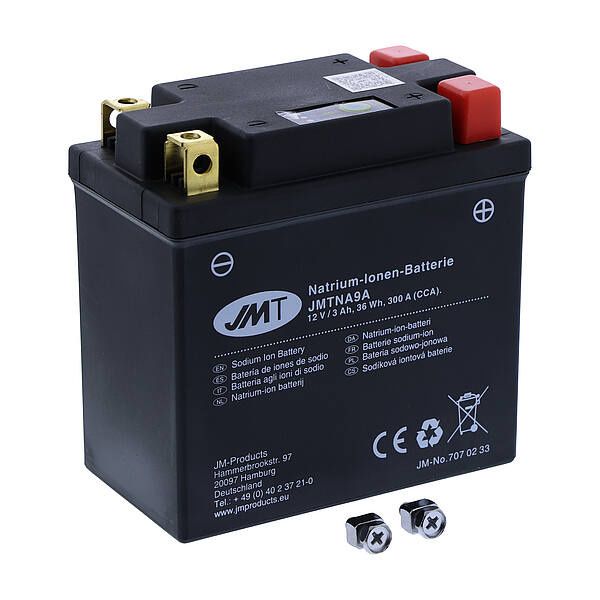
Instead of Lithium I decided to try a Sodium Ion battery . Too early to report on the performance yet (my bike is on my lift being rebuilt) but the cost is certainly better and the package is just as light as any Lithium batteries. Looks promising
 
Last edited:
Just got the Noco NLP14 back today, it's really small. Supposedly 500 CCA, tested on a BT200 battery tester, only returns 233 CCA, what gives??
You can use a load tester that basically just routes the current through a resistance heating element and you read the radial gauge, using the scale for the expected CCA of your battery. (Since it discharges the battery and heats up, you should only use it for a few seconds).

Like this:
1793016654024.png
 
Back
Top